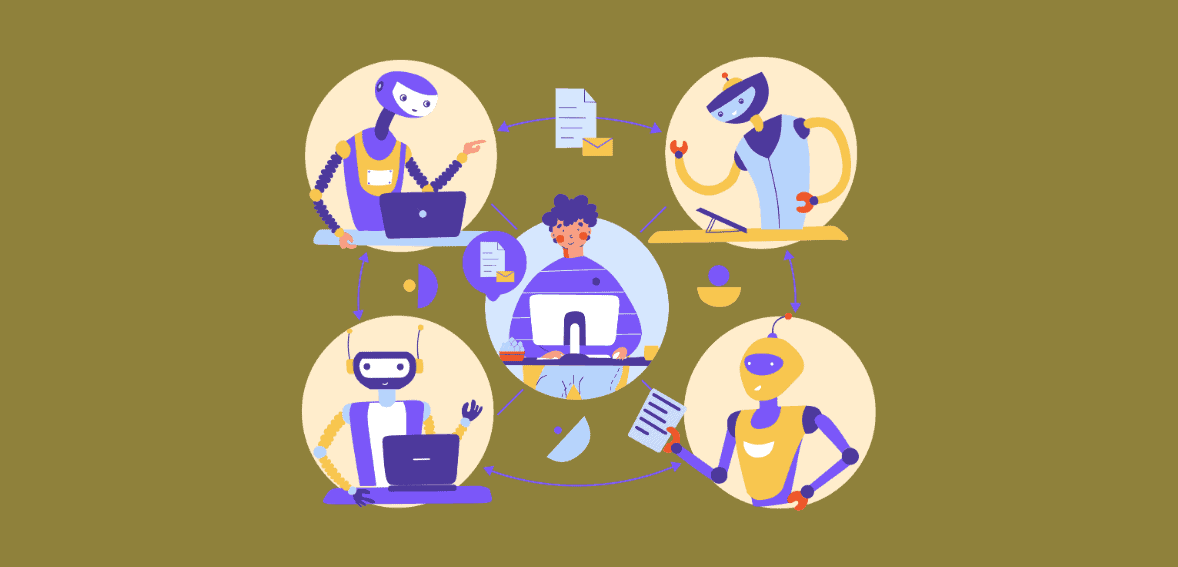
In 2025, a new wave of talent is entering the workforce, strapped with the power of generative artificial intelligence tools like ChatGPT, Claude, and DeepSeek. With generative AI, you can write codes faster, quickly generate content, solve complex maths problems, understand complex data/terms, and streamline other operations with just one prompt.
However, you may miss their full potential without using these tools effectively. Knowing how to apply generative AI in the right ways can make a significant difference in efficiency and output. No matter your background, understanding how to integrate AI into your workflow can help you work smarter, achieve better results, and boost productivity. Below, we explore practical ways to use generative AI to boost productivity.
This year has kicked off with the rise of generative AI tools like ChatGPT, Sora, Google Bard, DALL·E, Claude, DeepSeek, and Stable Diffusion, among others—all of which have shaken the business landscape and job market to their core.
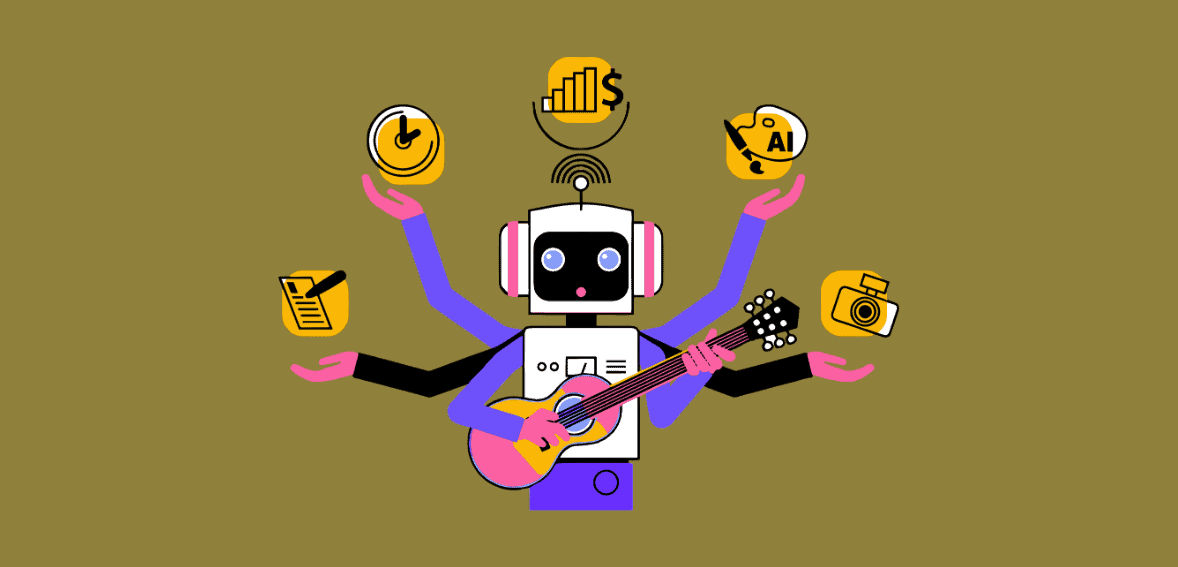
This type of AI uses machine learning to autonomously create broad types of content—whether it’s text, images, videos, audio, or even music. Neural networks use deep learning algorithms to mimic the activities of the human brain, allowing them to understand and reproduce patterns in existing data. The impact of generative AI is already evident as more people integrate it into their daily routines. Studies suggest that this technology can potentially replace 300 million jobs worldwide.
Projections suggest AI could create hundreds of new job categories while potentially boosting global productivity by 7% annually over a decade. However, approximately two-thirds of US and European jobs face some AI automation exposure.
These statistics might seem concerning for those building careers. The reality will likely be nuanced—neither a dystopian scenario where technology benefits only a few nor a workplace utopia where AI handles all tedious tasks.
Using generative AI for customer support is proving to be a transformative force, reshaping how companies interact with customers and manage support operations. Recent research confirms that AI-augmented customer service teams can resolve approximately 14% more issues per hour on average, with newer, less experienced agents sometimes achieving up to a 34% boost in productivity. Plus, AI tools are speeding up responses and enhancing the empathy and personalization of interactions, leading to significantly improved customer satisfaction.
Businesses are already reaping these benefits across industries, from telecommunications to financial services. For example, a survey found that 84% of telcos leveraging generative AI for customer support are realizing cost savings, with nearly half cutting costs by 6% or more. Beyond cost reduction, AI-powered systems empower agents by providing real-time, context-aware suggestions and automating routine inquiries. This allows human agents to focus on complex issues that require a personal touch and nuanced judgment.
In addition, the evolution of “agentic AI” blurs the lines between human and machine interactions. Leading companies like T‑Mobile and Deutsche Telekom are integrating these advanced tools into their support workflows, resulting in increasingly indistinguishable interactions from those delivered by human agents. With features such as sentiment analysis, predictive engagement, and automated summarization, business leaders expect the next 12 to 18 months to bring even more significant productivity gains and elevated customer loyalty.
Many organizations are now using AI as a frontline tool and training resource. By analyzing thousands of interactions, AI systems can identify best practices and help upskill customer support teams in real time, ensuring that new and experienced agents continuously improve their performance.
Modern AI tools automate routine functions like calendar management, email drafting, file organization, data entry, and document preparation with impressive accuracy and contextual awareness. For instance, Microsoft’s Copilot, now integrated across Office 365 applications, can automatically summarize long email threads, generate polished documents from brief prompts, and suggest optimal meeting times.
Similarly, Google’s recent update to Gmail features an “Insert” button in its Gemini panel. This button lets users embed AI-generated responses directly into email drafts, dramatically reducing manual copy‐and‐paste steps. These advancements mean that CEOs and employees can shift their focus from tedious, repetitive admin tasks to core business activities that drive growth and revenue.
AI tools have evolved far beyond simple text generators. Advanced platforms like ChatGPT‑4, DALL‑E 3, and Adobe’s Firefly now work in tandem to produce integrated, multimodal content – whether it’s SEO‑optimized blog posts, eye‑catching visuals, or even dynamic video content. These tools allow marketers to generate compelling copy and visuals in minutes, enabling rapid A/B testing and personalization at scale.

Modern generative AI solutions now come with built‑in analytics, which help measure content performance in real-time. This means that alongside content creation, marketers can immediately see which images, headlines, or video snippets resonate best with their target audience. It helps streamline iterative improvements and boost campaign ROI. In addition, integrations with popular design and publishing platforms (like Canva and Microsoft 365) ensure that AI‑generated content fits seamlessly into existing workflows, reducing manual editing and production time.
Ultimately, by leveraging these AI‑powered solutions, businesses can focus more on strategy and creativity rather than being bogged down by the repetitive aspects of content production. This transformation cuts costs, speeds up turnaround times, and empowers marketing teams to deliver a more consistent, engaging, and personalized brand experience across all channels.
For instance, recent updates in Adobe’s suite now enable automatic style matching and brand consistency checks, ensuring that every piece of content is generated quickly and aligns with a company’s unique voice and visual identity. Similarly, platforms like Jasper and Copy.ai are continually updating their models to capture nuanced tones and industry‑specific language better, making them indispensable tools for modern marketers
Generative AI for strategic workforce planning is the new way organizations approach talent management in a world of constant job transformation. The focus is shifting away from simply counting heads with fixed technical skills toward cultivating a flexible workforce that blends technical know‑how with critical behavioral capabilities. Microsoft CEO Satya Nadella recently noted that AI is transforming knowledge work, urging companies to reimagine workforce structures where human oversight works with AI-enabled tools.
This means that traditional roles such as coding, content creation, or data analysis are evolving. Rather than seeking candidates with narrowly defined skills, organizations are investing in continuous learning and development programs that enhance adaptability, collaboration, and problem‑solving. AI-driven predictive analytics can help forecast skill gaps and emerging job requirements by analyzing historical performance data and market trends. For example, advanced workforce planning platforms integrate AI to simulate future scenarios, offering insights into which hybrid skills will be most valuable as roles merge and evolve.
Strategic workforce planning now requires a dual focus. While AI can enable employees to transition into new roles by handling routine tasks, not every worker will be equally adept at adapting to these changes. Leaders must, therefore, balance investments in technical upskilling with efforts to nurture soft skills—like resilience and creative problem‑solving—that empower employees to thrive in an AI‑augmented environment.
Nowadays, work environments require a flexible blend of generalists and specialists. AI-driven platforms analyze team outputs in real time, identifying performance bottlenecks and quality issues before they escalate. This means leaders can monitor progress using data‐backed dashboards and automatically flag when a generalist might need expert input. This ensures that creativity isn’t stifled by overconfidence and that every project maintains high quality.
This approach encourages forming cross‑functional teams that seamlessly integrate specialists with generalists. AI tools automate routine performance reviews and feedback loops and facilitate continuous learning by recommending training and support whenever gaps are detected. Regular output-review checkpoints, established during pilot phases, enable managers to assess team efficiency and reconfigure workflows if necessary, thereby breaking down silos and promoting a culture of collaborative problem-solving.
Emerging AI platforms now offer personalized coaching by analyzing behavioral and work-pattern data. For example, enhancements in Microsoft 365 Copilot have started to provide contextual insights that help managers fine-tune team dynamics and task assignments. This boosts productivity and encourages an environment where technical and soft skills are continuously developed.
AI tools like GitHub Copilot, OpenAI Codex, and AI-powered coding assistants in Microsoft’s Visual Studio can turn natural language prompts into working code, suggest unit and integration tests, and highlight potential issues before they escalate. While developers still review and refine AI-generated outputs, these tools reduce time spent on routine coding tasks, enabling more focus on product features and complex problem-solving.
These AI-driven systems not only write code but also assist in documenting it, ensuring that project knowledge is captured efficiently and accurately. By integrating with continuous integration/continuous deployment (CI/CD) pipelines, these tools help teams maintain high code quality and streamline testing processes. Early adopters report productivity gains of up to 40%.
Generative AI revolutionizes organizational efficiency by enhancing processes and empowering employees with advanced automation capabilities. Unlike traditional RPA, which focuses on automating tasks such as data entry and email management, today’s AI platforms also analyze process data to deliver real-time, predictive insights that optimize workflows. The automation software market is expected to grow from $19.9 billion in 2021 to $76.4 billion by 2030, reflecting the increasing importance of these technologies.
Automation tools are being incorporated into daily business applications. They monitor workflows, identify bottlenecks, and suggest improvements, freeing employees to pursue more strategic activities. For example, pilot programs at major consulting firms have saved up to 20 hours per employee per month, allowing teams to focus on innovation instead of repetitive tasks.
Additionally, automation promotes a culture of continuous improvement with data-driven dashboards and analytics for managers. These tools help pinpoint inefficiencies and improve coordination across departments, thereby enhancing collaboration and decision-making in the workforce as roles evolve in a digital environment. This shift emphasizes developing technical and interpersonal skills, ensuring that AI not only automates tasks but also enhances human capabilities.

Modern AI tools analyze historical data in real-time, automate routine tasks such as summarizing meetings and generating reports, and predict potential bottlenecks before they occur. This intelligent automation allows project managers to shift their focus from administrative duties to strategic decision-making and creative problem-solving.
Autonomous AI agents further streamline workflows by dynamically adjusting resource allocation and mitigating risks based on continuous data insights. With robust human oversight to ensure quality and accuracy, these AI-driven systems enhance efficiency, reduce costs, and improve project outcomes.
Generative AI for interpretation and data analysis transforms how organizations extract, understand, and act on complex data. While traditional machine learning and deep learning (DL) techniques identify patterns and trends with minimal human intervention, generative AI goes several steps further by processing raw data and crafting human-like narratives, generating synthetic data, and forecasting future trends.
Generative AI leverages large language models (LLMs) and deep generative techniques—such as GANs, variational autoencoders, and transformer architectures—to automatically create insightful content from vast datasets. It can augment data analysis in several ways:
Below, we take a look at some of the top AI productivity apps in several key categories:
Modern AI chatbots have rapidly evolved from simple conversational agents into sophisticated productivity tools. Their progress is marked by advanced reasoning techniques (often called “chain‐of‐thought” reasoning) enabling multi-step problem-solving, contextual memory, and even integrated tool access. Here are four leading examples:
OpenAI has introduced advanced “pro” models, often referred to by names like o1, o3 mini, and o3 mini-high, for ChatGPT that feature extended chain-of-thought reasoning. These models internally verbalize their thought process, tackling complex tasks by breaking them down into intermediate steps before presenting a refined answer. It does not matter whether it be coding, mathematics, or content creation.
Additionally, ChatGPT’s upgraded memory feature enhances its interactions over extended sessions, enabling it to provide personalized and contextually aware responses. The more recent integration of ChatGPT with web browsing capabilities and plugins, such as Operator, for executing real-world actions has significantly boosted its utility as a versatile work assistant.
DeepSeek, a Chinese startup, has made significant strides in AI with its R1 model, which matches the performance of OpenAI’s o1 models but with much lower training costs and computational needs. The R1 model is notably efficient in tackling advanced mathematical and coding problems using reinforcement learning-driven reasoning. It also offers a transparent step-by-step reasoning process, allowing users to see how it arrives at its conclusions. This transparency has been hailed as a pivotal moment in AI, akin to a “Sputnik moment,” due to its impact on the now competitive space.
Additionally, DeepSeek adopts an open-source approach by releasing many of its models under open licenses, encouraging innovation and challenging established industry players through rapid iteration cycles.
Claude, an AI designed with a strong focus on ethical alignment and safety, incorporates constitutional AI principles and ethical guardrails, making it ideal for tasks requiring sensitive information handling. It produces natural and human-like outputs, with clear, conversational explanations.
Claude is also equipped with project and document management features, making it a favorite among professionals who need robust assistance in organizing projects and managing documents and tasks. However, despite its strong reasoning capabilities, Claude currently does not support real-time web browsing, though there are reports that enhancements in this area are forthcoming.
Google’s Gemini 2.0 has set a new standard in AI with a massive context window that can handle up to 2 million tokens. This vast capacity enables the model to undertake highly complex tasks and manage extensive documents without overlooking details. Further enhancing its capabilities, the Gemini 2.0 Pro Experimental version integrates external tools, allowing for real-time code execution and search, along with advanced multimodal inputs, such as combining images with text, significantly broadening its utility.
Despite these advanced features, Gemini 2.0 strategically prioritizes safety by avoiding political topics, which sometimes limits its output. Nevertheless, with these capabilities, Gemini 2.0 is well-equipped to compete with established AI models.
Some experts also monitor Grok (xAI), which is known for its irreverent personality and strong performance in creative and coding tasks. Grok leverages massive GPU infrastructures and offers a fresh, personality-driven (and relatively “uncensored”)approach that has attracted interest among developers seeking a different interaction style.
Before, Grok was only accessible through the X app (previously known as Twitter), but now it has an independent application with features like “Think,” “Deep Search,” and “Voice Search.”
The next generation of search tools merges traditional link-based discovery with conversational AI. These engines not only fetch information but synthesize, summarize, and even personalize search results in real-time:
Google has integrated generative summaries into its search platform as part of the Search Generative Experience. AI Overviews offer concise, AI-generated summaries that distill key insights from multiple sources.
At their core, AI Overviews are powered by advanced generative language models. Google uses its large language models, such as those in the Gemini family or PaLM 2, to analyze and synthesize information from multiple sources across the web. These models are built on transformer architecture, which excels at understanding natural language. They’ve been trained on vast amounts of data from websites, news articles, and even structured sources like the Knowledge Graph, so they can extract key insights and coherently summarize the topic.
Users can customize these summaries by adjusting the level of detail and complexity, providing a balance between quick answers and the opportunity to explore topics more deeply through linked resources. Initially launched in the US, this feature has seen a global rollout, demonstrating Google’s commitment to improving the search experience by leveraging AI-driven synthesis. This expansion has significantly impacted how information is accessed and processed worldwide.
Perplexity AI uses advanced models like GPT-3.5 and offers options to upgrade to GPT-4 or Anthropic’s Claude 3, providing a conversational interface for search. This approach presents concise answers alongside source citations and follow-up questions, enhancing the user experience with a chat-like format. Perplexity excels in focused research, allowing users to specify content types such as YouTube or Reddit, making it ideal for those requiring in-depth, source-verified responses.
With a free tier and a Pro version priced at around $20/month, Perplexity has quickly gained popularity as an alternative to traditional search engines.
Arc Search focuses on a mobile-centric design, optimizing the search experience for mobile users with features like clean, digestible pages, reader modes, language translations, and automatic archival of old tabs.
The interface reorganizes results into grids or feeds rather than long lists, emphasizing rapid discovery and ease of use. This appeals to users seeking quick, visually organized information, and its integration with modern mobile browsers enhances its appeal for users on the go.
Bing, powered by Microsoft, incorporates advanced AI capabilities through GPT-4 and its evolution into Microsoft Copilot to deliver a conversational search experience. This includes features like real-time summarization and direct answers with citations.
With strong integration across Microsoft’s product ecosystem, including Edge and Office, Bing enhances its search interface with additional functionalities like voice-assisted queries and code generation for developers. Despite holding a smaller market share than Google, Bing’s continuous innovation in AI search technologies keeps it competitive.
Modern content creation platforms leverage multiple large language models, advanced SEO integrations, and customizable brand voice training to streamline and enhance the writing process dramatically. Key players include:
Jasper AI has evolved into a multi-model content copilot that generates text using state-of-the-art LLMs (including integrations with GPT-4, Google’s Gemini, and Anthropic’s Claude) and offers a long-form assistant that “thinks through” articles via chain‐of‐thought reasoning. Its advanced brand voice training feature lets users upload style guides and historical content so that every output aligns perfectly with a company’s tone.
Integration with tools like Google Docs, Zapier, and Chrome extensions ensures that Jasper fits seamlessly into existing workflows.
Copy.ai is designed with a focus on marketing and sales copy. It features a conversational interface and a vast library of over 90 templates, from ad headlines to social media posts, that help overcome creative blocks quickly.
Although it’s built on GPT-3 technology, its emphasis on workflow automation and the ability to customize tone makes it ideal for teams that need fast, punchy, and persuasive content. Its automated workflow features streamline content generation and allow for rapid iterative improvements.
Writesonic stands out for its comprehensive suite, which covers short-form and long-form content generation. Its AI Article Writer leverages real-time web research and competitor analysis to produce SEO-optimized articles.
With advanced keyword integration and automated internal linking suggestions, Writesonic generates content quickly and ensures that the output is primed for organic search success. Multi-language support and specialized templates make it adaptable to global audiences and diverse content needs.
Anyword directly embeds predictive performance analytics into its content generation process. Using data-driven models, Anyword generates copy that is creative and optimized for conversion. It provides marketers with a performance score that forecasts audience engagement.
Its ability to tailor messages for different demographics and automatically suggest A/B test variations makes it a powerful tool for businesses looking to maximize ROI on their marketing campaigns.
Text enhancement tools now go far beyond simple spell-checks. They employ advanced natural language processing to refine clarity, tone, and style, ensuring that content is both polished and persuasive.
Hemingway Editor uses readability algorithms (such as the Flesch-Kincaid readability tests) to analyze sentence structure and complexity. Its interface highlights where text can be simpler or more concise and identifies common pitfalls like passive voice and overcomplicated phrasing.
Although it’s less about AI “generation” and more about editing, its advanced suggestions enable users to transform dense or verbose content into clear, compelling text.
Grammarly leverages rule-based algorithms and machine learning models to provide real-time grammar, punctuation, and style corrections. Its advanced tone detection and context-aware suggestions help writers adjust their language for maximum impact.
Integrated across multiple platforms, from desktop apps to browser extensions, Grammarly refines text. It provides detailed analytics on writing clarity, engagement, and overall readability, making it indispensable for professionals and academics alike.
Side note: Additional alternatives in this space include tools like ProWritingAid or QuillBot, which offer similar paraphrasing and optimization features, though Hemingway and Grammarly are among the most recognized for their robust, enterprise-level capabilities.
AI is transforming the video production landscape with tools that streamline everything from script-to-video generation to advanced post-production editing.
Synthesia revolutionizes video creation by allowing users to generate professional videos using AI avatars. Businesses can produce multilingual videos featuring hyper-realistic presenters by simply providing a script.
Its deep neural networks and text-to-speech models deliver natural intonation and realistic facial expressions, making it an excellent tool for creating corporate training, product demos, and marketing videos without the need for live filming.
Sora, released in late 2024, pushes the boundaries of creative video generation. Known for its creative spontaneity, Sora can convert text into video and add unexpected camera movements or scene transitions based on its “creative mode.”
Although it sometimes introduces extra elements that require careful editing, Sora’s ability to integrate uploaded images with keyframe controls offers filmmakers a unique, occasionally unpredictable, creative partner.
Runway has become a go-to solution for AI-powered video editing. Its Gen-3 Alpha model supports a range of functions, including video inpainting, lip-syncing, and dynamic keyframe editing. Runway’s strength lies in its ability to generate high-resolution video clips (up to 1080P, upscale to 4K) and provide real-time editing tools that adjust for unusual physics and camera dynamics.
The platform also offers automated scene detection and motion tracking, making it ideal for content creators and professional filmmakers who must rapidly produce polished videos.
Wondershare Filmora is a well-established video editing suite that has leveraged AI to simplify complex editing tasks. In its 2025 iteration, Filmora includes AI-driven features such as automatic scene segmentation, smart cropping, audio separation, and motion tracking. These tools reduce the manual workload in post-production, enabling creators to generate professional-quality videos with less effort.
Its integration of AI for color grading and visual effects further enhances the creative process, ensuring that even users with minimal editing experience can produce polished content.
Modern image generators are not only about creating visuals from text; they now offer precise control over style, composition, and even legal compliance. Leading platforms include:
Another OpenAI product, DALL‑E, has evolved into a highly refined text-to-image generator. Its latest version, DALL·E 3, focuses on an improved text-to-image pipeline. It integrates transformer-based improvements and even leverages ChatGPT for prompt rewriting to boost accuracy and detail in the output.
Advanced prompt engineering, inpainting (to seamlessly edit portions of images), and real-time style modulation allow professional designers to generate creative assets that can be seamlessly integrated into digital workflows. Deep API integrations enable developers to embed DALL‑E’s capabilities into content management systems and creative applications.
Midjourney is renowned for its distinctive, often painterly aesthetic. Its iterative feedback loop lets users fine-tune outputs by adjusting parameters like aspect ratio, detail level, and artistic style.
Advanced features like blending multiple images and fine-tuning via “prompt weights” provide creative professionals with a tool that produces high-quality visuals and adapts to evolving design trends. Its community-driven evolution means new artistic modes and customization features are rolled out frequently.
Adobe Firefly marks Adobe’s deep integration of generative AI into its Creative Cloud ecosystem. Firefly’s proprietary training (using licensed, ethically sourced datasets) ensures that generated images are copyright‐safe. Its features include real-time style transfer, vector-based output options, and seamless integration with Adobe Photoshop and Illustrator.
This allows creatives to quickly prototype, iterate, and polish designs while maintaining strict brand guidelines. Firefly’s intuitive interface and extensive presets make it a powerful tool for professionals who need consistency and rapid turnaround.
Using Shutterstock’s extensive image library, Shutterstock AI combines generative capabilities with automated image tagging and metadata enhancement. It is optimized for commercial use. It ensures that outputs meet strict quality and copyright standards.
Advanced machine learning models help generate novel images from text prompts and suggest relevant visuals for specific projects, thereby streamlining creative workflows in marketing and advertising.
Recent breakthroughs in neural audio synthesis have given rise to AI tools capable of generating realistic voices, compelling musical compositions, and adaptive soundscapes…all on demand:
Riffusion uses diffusion models to create continuous musical loops by “painting” spectrograms that are then converted into sound. This approach enables the generation of ambient and experimental soundscapes with unique textures.
Riffusion’s ability to combine user-defined parameters (such as tempo and mood) with generative creativity makes it ideal for background scores, podcasts, and experimental projects.
Developed by Meta, MusicGen is an advanced model that composes full songs from text prompts. It supports multi-track generation, allowing for individual control over instrumentation and dynamics.
With features such as genre conditioning and adjustable mood parameters, MusicGen can produce everything from classical compositions to modern electronic music. It enables creators to experiment with new sounds and even integrate AI-generated tracks into multimedia projects.
Mubert delivers real-time, algorithmically generated music streams for commercial and personal use. Its AI synthesizes music continuously by learning from vast datasets of sound samples, making it an excellent solution for content creators who need royalty-free background music for videos, apps, or live events.
Mubert’s API integration allows developers to embed custom music streams directly into digital experiences.
BeatOven produces beats and full tracks by combining rhythm generation with automated mixing. Its AI-driven engine adjusts tempo, key, and instrument layering based on user inputs and target moods.
BeatOven’s features include dynamic beat sequencing, real-time sound manipulation, and genre-specific presets. This makes it a comprehensive tool for music producers, advertisers, and multimedia creators who must rapidly prototype or finalize musical compositions.
As projects become more complex, AI is being integrated into task and project management platforms to improve efficiency, forecast bottlenecks, and enhance collaboration:
Asana has incorporated advanced AI capabilities that help users transform natural language inputs into detailed tasks. Using machine learning to analyze past project data, Asana automatically suggests task prioritization, predicts potential delays, and even recommends optimal resource allocation.
Its AI-powered timeline view and sentiment analysis of team communications provide managers with actionable insights to keep projects on track.
ClickUp’s AI integration allows for the creation of custom workflows and automated task assignments based on historical data and user behavior. Its natural language processing features enable quick task creation and real-time updates directly from chat inputs.
Plus, ClickUp’s predictive analytics help forecast project bottlenecks and track progress through dynamic dashboards that consolidate performance metrics from multiple sources, ensuring that teams remain agile and informed throughout the project lifecycle.
While Trello has long been known for its simple, visual Kanban boards, recent updates have infused it with AI-powered automation. The enhanced Butler automation now uses machine learning to analyze patterns in board activity and suggest smart card labels, due date adjustments, and workflow optimizations.
Trello’s integrations with third-party apps further allow teams to streamline their processes with automated updates, ensuring that no task falls through the cracks.
Monday.com has evolved into an AI-driven work operating system. Its advanced modules include real-time risk assessment, performance forecasting, and resource reallocation suggestions. By analyzing team data and historical project trends, Monday.com’s AI engine can predict delays and flag potential issues before they escalate.
Its customizable dashboards, automated reporting, and seamless integration with communication tools help teams collaborate more effectively and drive projects to completion with enhanced accountability.
The use of generative AI tools across various professional fields marks a significant shift in productivity and innovation methods. AI’s influence is profound, from enhancing customer interactions and simplifying administrative tasks to transforming content creation and optimizing workforce and project management. Adopting these technologies improves efficiency, cuts costs, and enhances work quality by automating routine tasks and encouraging a culture of creativity and strategic thinking.
Leveraging generative AI offers a major competitive edge for both individuals and organizations, promoting growth and enabling quicker adaptation to market changes. By effectively utilizing AI capabilities, we can achieve new productivity heights, spur innovation, and drive a future where work is not only about doing more but also about achieving better outcomes with precision and creativity. This technological shift is not just about replacing outdated methods but enhancing and expanding our potential to accomplish more efficiently and effectively.
Businesses can boost productivity using generative AI for content creation, customer support, and administrative tasks. AI tools like ChatGPT help automate routine work, allowing employees to focus on strategic tasks. Training staff to work alongside AI ensures better efficiency and creativity.
Businesses should reduce AI bias, ensure transparency, and protect data privacy. Using diverse datasets, providing clear AI explanations, and following regulatory guidelines help maintain ethical standards and build trust. Regular monitoring ensures AI tools are used responsibly.
Generative AI helps identify skill gaps, recommend learning paths, and forecast job trends. It also streamlines recruitment, improves performance management, and supports ongoing training, assisting employees to adapt to evolving job roles.