
Posted: November 11, 2024 | Updated: January 10, 2026 at 9:32 PM
Direct-to-consumer brands are everywhere today, and they’re known for building strong, direct relationships with their customers. Focusing on unique shopping experiences, these brands stay memorable and often become customer favorites. Traditional brands and established retailers can learn a lot by studying how DTC brands stand out and connect with customers in a crowded market.
Recent statistics show that about 53% of consumers worldwide prefer purchasing online directly from brands because they perceive it as offering lower prices and better value than buying from third-party retailers. This preference is driving an increase in DTC sales.
To highlight this growing trend, we have compiled a list of the top 10 DTC brands in the US that are particularly noteworthy right now.

Direct-to-consumer (DTC) brands sell products straight to customers, bypassing third-party retailers or wholesalers. They manage all aspects of sales, including promotion, advertising, and customer support, which intermediaries typically handle. This setup gives DTC brands direct customer access, allowing them to control brand messaging, customer experience, and data collection.
DTC brands can gather customer feedback directly, informing product design, marketing strategies, and customer service. With this access to customer insights, brands can offer more personalized marketing, respond quickly to customer preferences, and strengthen brand identity. While DTC demands a greater commitment to marketing and support, it enables brands to retain full control over their market presence and customer interactions.
DTC marketing originated long before the internet, dating back to early direct selling methods. In 1785, farmers began delivering milk directly to customers’ homes, cutting out middlemen. Later, in 1886, Avon used a network of female sales representatives to sell beauty products directly, establishing a successful model that endured over time.
The online shift to DTC took off in the early 2000s, with brands like Warby Parker, Bonobos, and Everlane leveraging e-commerce and social media to build online storefronts. These companies saw the Internet as a way to connect directly with customers on a large scale, bypassing traditional retail and creating brand experiences designed for online shoppers.
DTC brands resonate with modern consumers, particularly millennials, who value trust, authenticity, and personalized experiences. Common strategies include targeted emails, appealing packaging, and responsive customer service to build loyalty. Techniques like cart abandonment reminders increase conversions by re-engaging shoppers, while feedback loops give brands insights into customer preferences, helping them refine products and interactions.
The DTC model also enhances profit margins by eliminating retail markups, allowing brands to retain more revenue. This approach enables sustainable growth and greater flexibility to respond to market demands, making it a preferred model for brands focused on controlling customer relationships and pricing.

DTC brands have gained attention for their direct connection with customers and innovative product design, marketing, and engagement approaches. With e-commerce expanding and more consumers choosing to buy directly from brands, DTC companies have seen impressive growth, attracting strong customer loyalty and significant investment.
Below, we will highlight the top 10 DTC brands across various niches in the US, with insights into their monthly organic traffic as of November 2024 (source: Ahrefs), recent funding rounds, and a brief of each company to understand how these brands are still competitive in a dynamic market.
Monthly Organic Traffic: 194.8K
Founded in: 2015
Recent Funding: $126 million (Series C)

Image source
Lovevery, based in Boise, Idaho, focuses on improving early childhood development with well-designed educational toys and resources. Their main product, The Play Kits, is a subscription service that provides learning materials aligned with children’s developmental stages. These kits are developed with advice from child development experts, therapists, and specialists and are based on the Montessori method to encourage independent learning and development.
By 2024, Lovevery had grown to more than 375,000 subscribers worldwide, a 17% increase from the previous year. In 2023, the company’s subscription revenue was $170 million, contributing to a total net revenue of $221 million—a 21% increase from the year before. Lovevery’s products are available in 60% of US zip codes and 32 international markets, including recent expansions into Australia, Singapore, and New Zealand.
In March 2024, Lovevery was named one of Fast Company’s Most Innovative Companies in education. The company is committed to sustainability, using durable, organic, and sustainably sourced materials for its products. Lovevery also provides extensive support to parents to help them meet their children’s developmental needs.
Lovevery has raised $126 million in a Series C financing round, which will allow it to continue developing and broadening its product range.
Monthly Organic Traffic: 37.9K
Founded in: 2016
Recent Funding: $70 million (Series B)
Image source
Waterdrop, based in Vienna, Austria, is a DTC brand that offers “micro drinks”—small, flavored cubes that dissolve in water to encourage better hydration. These sugar-free cubes, made from natural fruit and plant extracts, are enhanced with vitamins and come in recyclable packaging. Waterdrop also partners with Plastic Bank to remove one plastic bottle from the ocean for each 12-pack sold, underlining its commitment to environmental sustainability.
The company aims to reduce plastic use and CO₂ emissions while promoting healthier hydration habits. In 2022, Waterdrop secured $70 million in funding to aid its expansion. By 2024, the company will operate over 40 retail outlets in Europe, the United States, and Singapore, including mall kiosks that provide cost-effective opportunities to explore new markets and products.
Led by founder and CEO Martin Murray, Waterdrop has broadened its range to meet diverse consumer needs. Its products include Microlyte, for exercise recovery, and Microenergy, which offers a natural energy boost. Additionally, the company sells a variety of innovative, environmentally friendly bottles and accessories, further committing to sustainability and user convenience.
Waterdrop’s innovative hydration solutions and commitment to environmental causes make it a notable entity in the wellness market.
Monthly Organic Traffic: 69.2K
Founded in: 2017
Recent Funding: $50 million (equity financing)
Image source
Based in Milford, Connecticut, Athletic Brewing Company has become a prominent figure in the non-alcoholic craft beer market. The company produces various non-alcoholic beers, including IPAs, golden ales, stouts, and light beers, designed for consumers who want flavorful options without alcohol.
Beyond its main beer products, Athletic Brewing has expanded into the seltzer market with its DayPack Sparkling Water line, which includes hop-infused flavors as refreshing, non-alcoholic alternatives. By July 2024, Athletic Brewing raised $347.54 million across 13 funding rounds. The most recent round, a $50 million equity investment led by General Atlantic, placed the company’s value at about $800 million.
Athletic Brewing has seen considerable growth. It ranks among the top 20 US breweries by volume, with sales exceeding 258,000 barrels in 2023. The company’s products are distributed in over 75,000 locations throughout the United States and have reached international markets, including Canada and the United Kingdom.
The company’s innovative practices have earned it recognition, including a spot on TIME’s “100 Most Influential Companies” list for 2024. Athletic Brewing is dedicated to sustainability and community involvement through its “Two for the Trails” initiative, which donates 2% of sales to preserve and rehabilitate local trails.
Led by co-founders Bill Shufelt and John Walker, Athletic Brewing continues to shape the non-alcoholic beverage industry by offering quality products that cater to consumers pursuing healthier lifestyles.
Monthly Organic Traffic: 65.5K
Founded in: 2020
Recent Funding: $15.5 million (Series C)
Image source
BRUNT Workwear, founded by Eric Girouard and David Chernow, is a Boston-based DTC brand specializing in robust work boots, apparel, and accessories for tradespeople. The company aims to deliver high-quality, comfortable, and innovative workwear designed to meet the needs of various labor-intensive fields.
BRUNT’s product line features work boots engineered for comfort, flexibility, and durability in tough conditions. Additionally, the company offers a range of apparel and accessories designed for various work settings, ensuring that professionals have the necessary gear for their jobs.
As of September 2024, BRUNT Workwear has accumulated $44 million in funding across three rounds. The latest funding, a Series C round in May 2023, contributed $15.5 million.
Initially, BRUNT operated solely as a DTC brand, but in February 2024, it expanded its distribution by partnering with 23 retail partners. This expansion made its products accessible in over 110 stores across the United States, responding to customer demands for in-store purchasing options and extending the brand’s reach.
Alongside its retail growth, BRUNT released updated versions of its flagship work boots, the Marin and Bolduc collections. Based on customer feedback, these enhancements include better slip resistance, improved cushioning, and waterproof features to accommodate trade workers’ needs better.
BRUNT is dedicated to supporting the significant yet often underrepresented group of over 23 million US workers in the construction, installation, maintenance, and repair sectors. By emphasizing quality, comfort, and innovation, BRUNT strives to provide workwear that effectively supports professionals in their challenging roles.
Monthly Organic Traffic: 1.2M
Founded in: 2013
Recent Funding: $148.3 million (Series C)

Image source
Oura, based in Oulu, Finland, has transformed personal health monitoring with its advanced smart rings. These rings track a wide range of health metrics, such as heart rate, blood oxygen levels, sleep patterns, and activity levels, all in a sleek and lightweight design.
In October 2024, Oura unveiled the Oura Ring 4, a notable development in wearable health technology. This new model features a full titanium body with recessed sensors to improve comfort and durability. It is available in sizes ranging from 4 to 15 and offers six finishes: Silver, Brushed Silver, Stealth, Black, Rose Gold, and Gold. The Oura Ring 4 uses “Smart Sensing” technology with 18 signal pathways, which enhances the accuracy of data collection, even if the ring moves on the finger. It boasts a battery life of up to eight days on a single charge, with a full recharge taking about 120 minutes. The ring is water-resistant up to 100 meters (328 feet), making it suitable for swimming and other water activities.
The ring integrates smoothly with smartphones, automatically syncing with health apps to provide real-time access to health data. The newly redesigned Oura App offers a more user-friendly interface, simplified tabs for daily insights, and tracking long-term health trends.
As of 2024, Oura has raised $148.3 million in funding, demonstrating strong investor support for its innovative health monitoring solutions. The company’s focus on user-centric design and cutting-edge technology has established it as a leader in the wearable health tech sector.
Monthly Organic Traffic: 71.4K
Founded in: 2019
Recent Funding: None
Image source
Glamnetic was founded in 2019 by Ann McFerran and Kevin Gould and is headquartered in Los Angeles, California. This beauty brand is known for its magnetic eyelashes and press-on nails.
Glamnetic focuses on making beauty routines easier by providing high-quality, easy-to-apply products that suit various personal styles and preferences.
The company promotes the idea that beauty should be easy, enjoyable, and accessible to everyone. It aims to deliver this through innovative and sustainable products and a strong commitment to meeting consumer demands.
Their mission is to enable individuals to feel confident and glamorous effortlessly, leveraging the impact of their products. Glamnetic also prioritizes accessibility and sustainability, aiming to impact the beauty industry positively. Remarkably, the company reached $50 million in revenue within its first year without external funding.
Monthly Organic Traffic: 30.1K
Founded in: 2017
Recent Funding: Series B (Undisclosed Amount)
Image source
Based in New York, NY, Little Spoon was established by Angela Vranich, Michelle Muller, and Ben Lewis. The company has secured around $90 million in funding with five rounds.
The brand is dedicated to providing organic, clean, and wholesome food products designed for different stages of a child’s growth. They aim to make parenting easier by offering nutritionally rich and safe food choices, including infant purees, finger foods, toddler meals, and snacks. Little Spoon prioritizes quality and convenience, utilizing more than 100 organic ingredients and eschewing artificial additives. Their Clean Label Project certification affirms their commitment to safety, which ensures each meal and snack contributes to a healthy foundation for children.
As of September 2024, Little Spoon became the first US baby food brand to implement safety standards aligned with the European Union. Little Spoon set public limits and shared test results for heavy metals, pesticides, and plasticizers to increase transparency and trust in baby food safety.
In October 2024, the company broadened its product range to include organic oatmeal baby cereal for infants four months and older. This cereal is made from ancient grains like barley and millet and delivers 14 grams of whole grains and 13 essential vitamins and minerals per serving. It contains no added sugar, rice, or the top nine allergens.
Additionally, Little Spoon launched organic Puffs, a snack for babies over six months old designed to support self-feeding and fine motor skill development. These rice-free, easy-to-grasp puffs include Organic Kale Apple Curls and Organic Banana Pitaya Rings.
As of February 2023, Little Spoon had delivered over 27 million meals, serving hundreds of thousands of parents across the US.
Monthly Organic Traffic: 174.6K
Founded in: 2018
Recent Funding: $16.75 million (Series A)
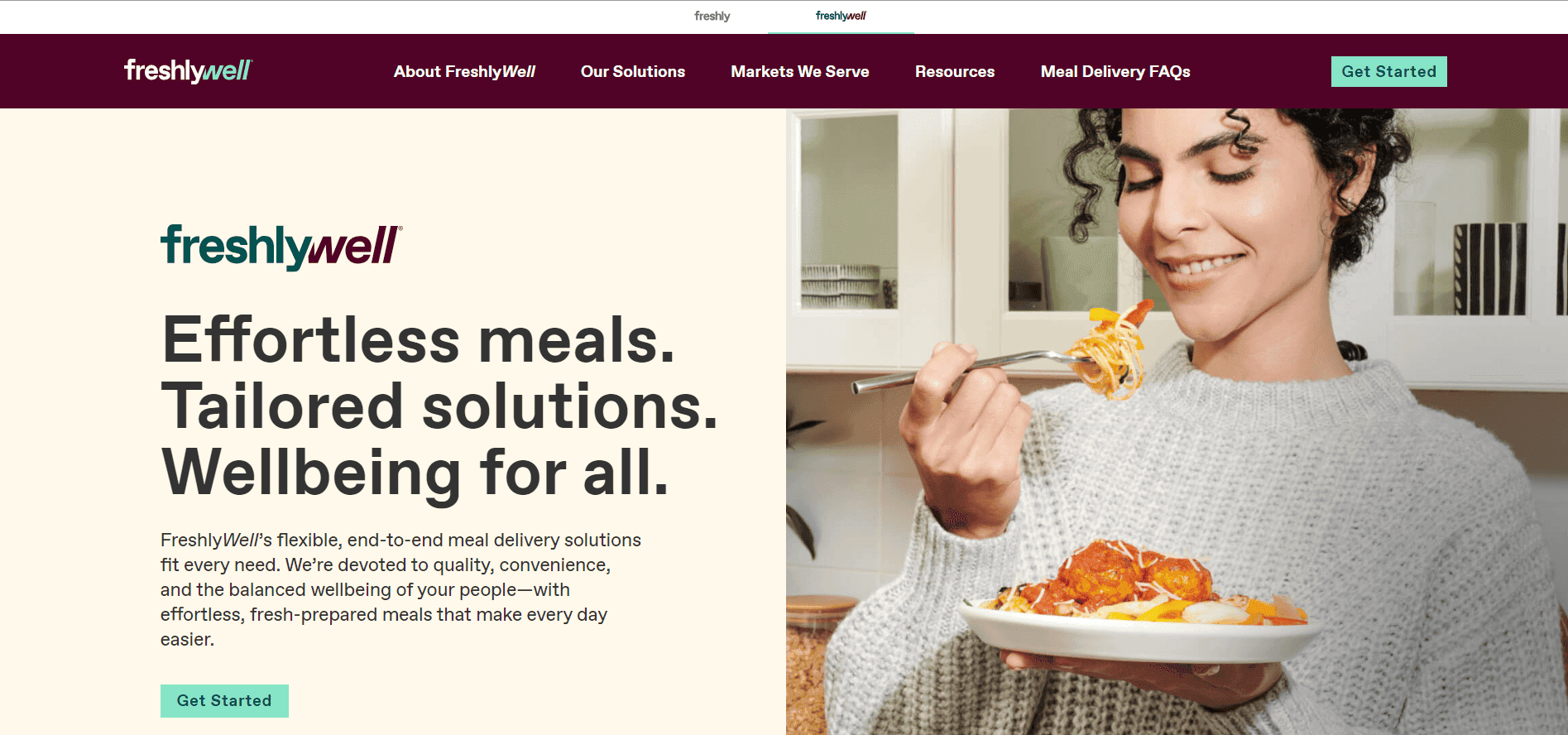
Image source
Caraway, based in New York, NY, was founded by Jordan Nathan. The company has accumulated roughly $27.2 million in funding over two rounds, including one early-stage round. Caraway is known for its non-toxic, non-stick cookware, bakeware, and kitchen accessories. Their offerings include ceramic-coated cookware and stainless steel sets, focusing on safety, sustainability, and ease of use. The ceramic non-stick items are designed to minimize chemical exposure, providing a safer option than traditional cookware. The brand aims to merge stylish design with practical functionality to improve the cooking and baking experience while being environmentally responsible.
In November 2023, Caraway broadened its partnership with The Container Store, making its complete range of products available online at all US locations. This development established Caraway as the first cookware brand available at The Container Store, indicating the retailer’s strategic expansion into complementary categories. In September 2024, Caraway launched a new line of enameled cast iron cookware. This series is made for optimal heat retention, durability, and easy cleaning, offering consumers a high-performance, non-toxic cooking solution.
Monthly Organic Traffic: 113.9K
Founded in: 2017
Recent Funding: $350,000 (Series B)
Image source
Prose, based in New York, NY, specializes in personalized hair care products. The company has raised $25.3 million over four rounds. Prose offers custom formulations for its main products, such as shampoos, conditioners, hair masks, and styling products. Customers undergo an online consultation that gathers details about their hair type, lifestyle, and preferences, allowing Prose to create products suited to each individual’s needs. Additionally, Prose offers a line of supplements designed to promote hair growth and scalp health.
The company prioritizes using natural ingredients, avoiding sulfates, parabens, and phthalates, and commits to sustainability with eco-friendly packaging and ethical sourcing practices.
Prose has seen a 192% increase in search growth over the last five years, showing a consistent increase in consumer interest. In 2024, Prose broadened its offerings to include personalized skincare products, extending its customization approach to meet individual skin care needs and demonstrating its commitment to providing tailored beauty solutions.
Monthly Organic Traffic: 16.5K
Founded in: 2014
Recent Funding: $3 million (Series B)

Image source
Embr Labs, founded by Sam Shames and Matthew Smith, has secured about $35 million in total funding. The company focuses on personal temperature management through its innovative Embr Wave product. This wearable device allows users to adjust their personal temperature, providing relief from hot flashes, aiding in sleep improvement, reducing stress, and increasing comfort. The Embr Wave utilizes cutting-edge thermoelectric technology, allowing immediate and tailored temperature adjustments.
In February 2024, Embr Labs released findings from a sleep study in partnership with the West Virginia University Rockefeller Neuroscience Institute. The research showed that users of the Embr Wave saw marked enhancements in sleep quality, such as decreased sleepiness, improved sleep quality, reduced heart rates at night, and higher sleep efficiency. The study also noted better cognitive function in the morning among participants. Dr. Pam Peeke, a senior clinical investigator at Embr Labs and co-author of the study, commented on the significant impact of the device, highlighting its ability to improve both the quality and physiological aspects of sleep, thereby enhancing life quality.
Embr Labs has earned accolades, including a SleepTech Award from the National Sleep Foundation and a place on the Foremost 50 list, which recognizes innovative consumer brands.
DTC brands set themselves apart through several distinct attributes:
DTC brands excel in articulating a compelling brand story beyond their products. They often emphasize their origins, the founder’s journey, or a pivotal value that propels the brand. This narrative helps build a distinct identity and connects with customers who share the brand’s values.
For instance, DTC brands in the wellness or sustainability sectors often discuss their motivations for creating products, which they say are in response to a market void of reliable, quality options.
DTC brands manage all aspects of the customer experience, from the website interface to packaging and after-sales support. Owning direct communication channels enables them to provide personalized services and quickly adapt based on customer feedback. This comprehensive control helps ensure a consistent and customized experience for customers.
DTC companies collect and analyze customer data independently of third-party retailers. This direct insight allows them to understand customer preferences, evaluate product performance, and identify improvement areas.
They can then refine products, launch new ones, and adjust their marketing strategies based on genuine customer input, making them more agile than traditional brands.
DTC brands frequently employ original, targeted marketing methods. Many utilize digital platforms, including social media and influencers, to connect directly with customers, designing campaigns that embody the brand’s character and appeal to specific demographics.
This strategy allows DTC brands to test unconventional marketing approaches and produce content that is often more authentic and engaging, particularly to younger audiences.
Transparency is a hallmark of many DTC brands, driven by consumers’ interest in ethical practices and sustainability. These brands are typically forthright about their sourcing, production processes, and pricing.
Being transparent builds trust and sets DTC brands apart from traditional businesses, which may not be as open.
A clear mission beyond mere product sales defines many DTC brands. Brands emphasizing sustainability, wellness, or social impact integrate these principles into their products and marketing. This mission-centric approach attracts customers seeking to support brands that contribute to wider social or environmental objectives.
DTC brands actively engage with their customers via social platforms, newsletters, and branded content, cultivating loyal communities. Many focus on interactive engagement, using social media to promote products, share customer experiences, and develop a sense of community among their followers.
Direct access to customer data equips DTC brands to offer personalized support. They can directly manage complaints, returns, and inquiries, often resolving issues more efficiently than brands dependent on third-party sellers. Effective customer support boosts satisfaction and can enhance brand loyalty.
DTC brands often emphasize innovation and uniqueness in their product designs. With direct customer feedback and close monitoring of market demands, they can launch novel products that truly cater to their audience. This strategy supports more dynamic product development and the flexibility to adjust or enhance offerings as market needs evolve swiftly.
DTC brands have redefined how companies connect with consumers, offering distinct advantages that traditional retail often lacks. By directly managing all stages of the customer journey—from product design and online storefronts to marketing and customer support—DTC brands gain valuable insights that drive personalized experiences and foster loyalty. Their direct feedback channels enable rapid product adjustments, ensuring offerings align closely with consumer needs.
Unique marketing strategies, often featuring social media influencers and authentic storytelling, allow these brands to reach specific audiences more effectively. Emphasizing transparency and ethical practices also builds trust, appealing to consumers who prioritize sustainability and value-driven choices. This approach often creates strong communities around DTC brands, further solidifying their customer base.
DTC brands are set to grow in a market increasingly shaped by values and direct consumer relationships. Their agile, customer-centered models are examples of traditional brands looking to stay competitive in a shifting retail landscape.
DTC brands sell products directly to customers, bypassing traditional retailers or wholesalers. This business model allows brands to control their marketing, sales, and customer interactions. By managing the entire customer journey, DTC brands can gather valuable first-party data, offer personalized experiences, and adapt quickly to consumer preferences, leading to potentially higher margins and customer loyalty.
Consumers are drawn to DTC brands for several reasons, including the appeal of buying directly from the source and the personalized shopping experiences these brands often provide. DTC brands frequently utilize innovative marketing strategies and maintain a strong online presence on platforms where their target audiences are most active, such as social media. Their approach often includes user-centric, flexible subscription services and community-building activities.
Successful DTC brands are hyper-focused on delivering customer-centric experiences. They often start with a core product and gradually expand their offerings based on customer feedback and market demand. Key strategies include utilizing social media for engagement, employing data-driven marketing, and creating subscription models that provide convenience and value to their customers. These brands prioritize responsiveness to customer feedback.